
EXPAND A PRODUCTION CELL
Yard Systems
These two concepts share an orbital setting but place responsibility at different scales. Freefall Yard follows the shape of a growing factory. Dock Nine follows the occupation and release of a constrained work site. Neither treats an incoming container as an item that can disappear into unlimited storage. Both ask players to provide a physical route between a promise and its completion.
Freefall Yard
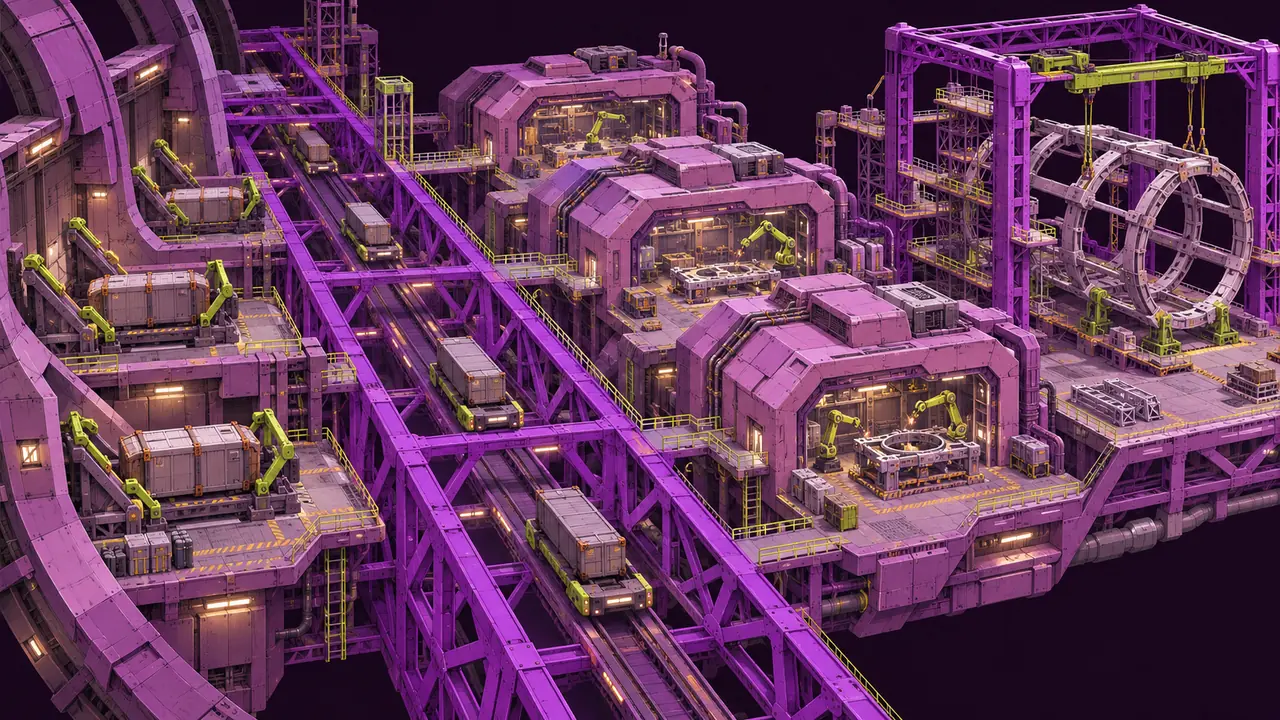
Freefall Yard / continuous production
Open the production cell to inspect a proposed factory arranged around a transport spine. A receiving cradle transfers captured cargo to local carriers. Processing modules draw material from that network and return components, scrap and empty containers. The player chooses where capacity belongs and which routes deserve to remain open. Expansion is a spatial decision before it becomes a larger number on a production chart.
The concept page explains a cycle of receiving, placing, inspecting and revising. It also describes why service clearances stay visible when a module is idle. Enter the Freefall Yard design dossier for the world, interface goals and current concept stage.
Full design dossier →Dock Nine
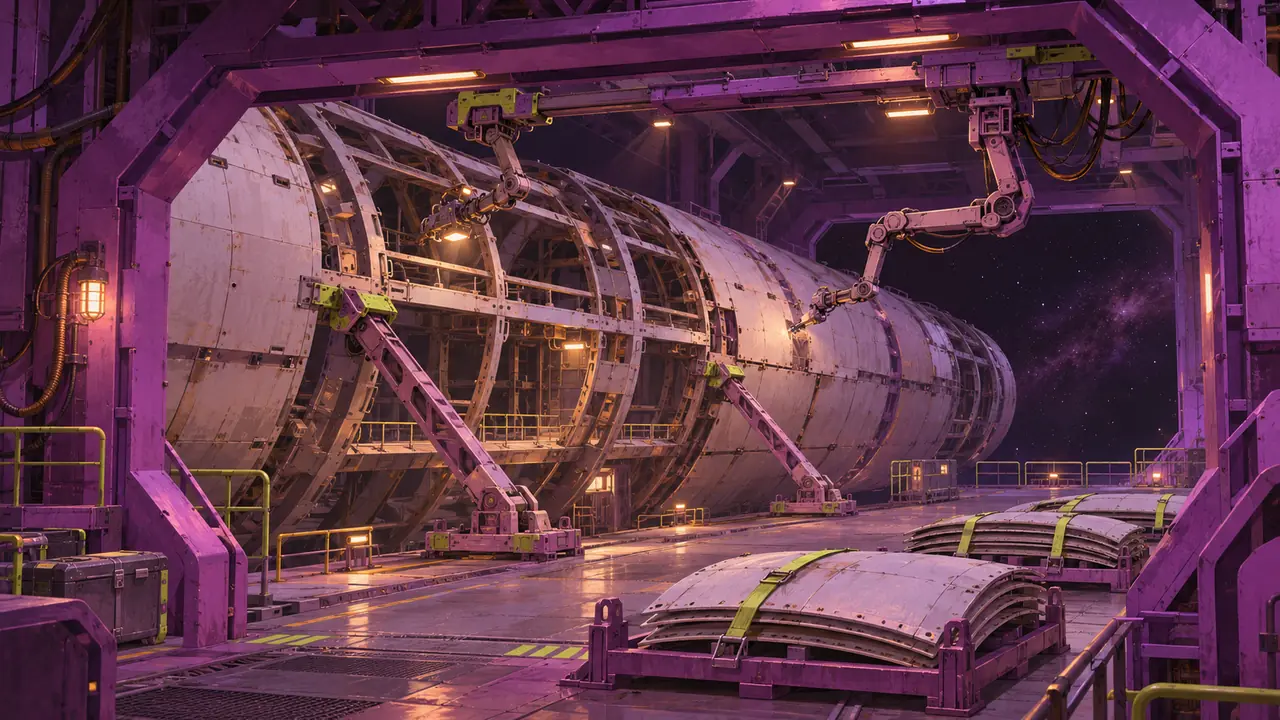
Dock Nine / temporary occupation
Open the refurbishment cell to examine a station whose main resource is usable work space. The arrival of a damaged structure changes which berths can be approached and which tools can reach their targets. A compact repair may need a surprisingly large envelope. Players decide when to admit work, where to hold components and how to keep one interrupted job from trapping every other movement.
Unlike the continuous factory, this concept gives particular attention to handovers. Inspection discovers conditions that scheduling could not assume away. Read the Dock Nine concept for the proposed clearance view and staging decisions.
Full design dossier →Compare the two responsibilities
A factory manager asks whether the next module improves the whole network. A berth coordinator asks whether the next commitment leaves the site operable. The same crate can be useful stock in one view and a temporary obstacle in another. Our presentation keeps those viewpoints separate rather than presenting two interchangeable maps with different machinery. The design record follows the underlying questions across both concepts.